The Problem
Most creams don't work on men — and there's a clinical reason for it.
It usually starts with a photograph. A holiday shot, a wedding candid, a passport renewal — and a face that looks more tired and more aged than the one you carry in your head.
The standard response has been a slowly filling bathroom shelf — serums, retinoids, eye creams. But most of those products were developed for thinner, drier, more permeable skin. Male skin is a structurally different organ. Roughly 25% thicker, denser in collagen, and significantly oilier.
The result: most topical actives sit on the surface, mix with sebum, and rinse off in the morning shower long before they reach the layer where aging actually happens.
25%
Thicker than female skin. Topical products penetrate far less effectively.
1%
Annual loss of collagen after age 30 — accelerating each decade.
8–12wk
How long visible structural change takes with the right stimulus.
Combine that with the fact that men start losing collagen earlier and lose it faster than women — and you have a picture that explains a lot. By 35, the face is producing meaningfully less of the structural protein that keeps skin firm. And nothing on the bathroom shelf is changing that.
Creams vs Olapen
The same routine, two fundamentally different approaches.
Topical products work on the surface. Olapen activates the layer beneath, where collagen and elastin are actually produced.
Topical Products
Olapen Method
✕ Sit on the skin's surface
✓ Reaches the dermal layer
✕ Don't trigger collagen production
✓ Activates natural collagen renewal
✕ Daily routine, ongoing cost
✓ 10 minutes, once a week
✕ Designed for thinner female skin
✓ Engineered for male skin density
The Solution
The clinical treatment dermatologists have used for years — adapted for home.
The mechanism is called Collagen Induction Therapy. Rather than depending on whatever a cream can or can't absorb, it works by triggering your skin's own repair response.
Controlled micro-channels are created in the outer layer of the skin. The body interprets this as a stimulus to repair, and fibroblasts — the cells that produce collagen and elastin — switch on. Over the following weeks, the skin rebuilds itself from within. Firmer texture. Smoother tone. Reduced fine lines. A face that simply looks like it's been resting better.
Until recently, this was only available in clinics. $200–$500 per session. A handful of sessions a year. For most men, the friction was enough to never start.
Introducing
Olapen
The clinical mechanism, refined for safe weekly use at home.
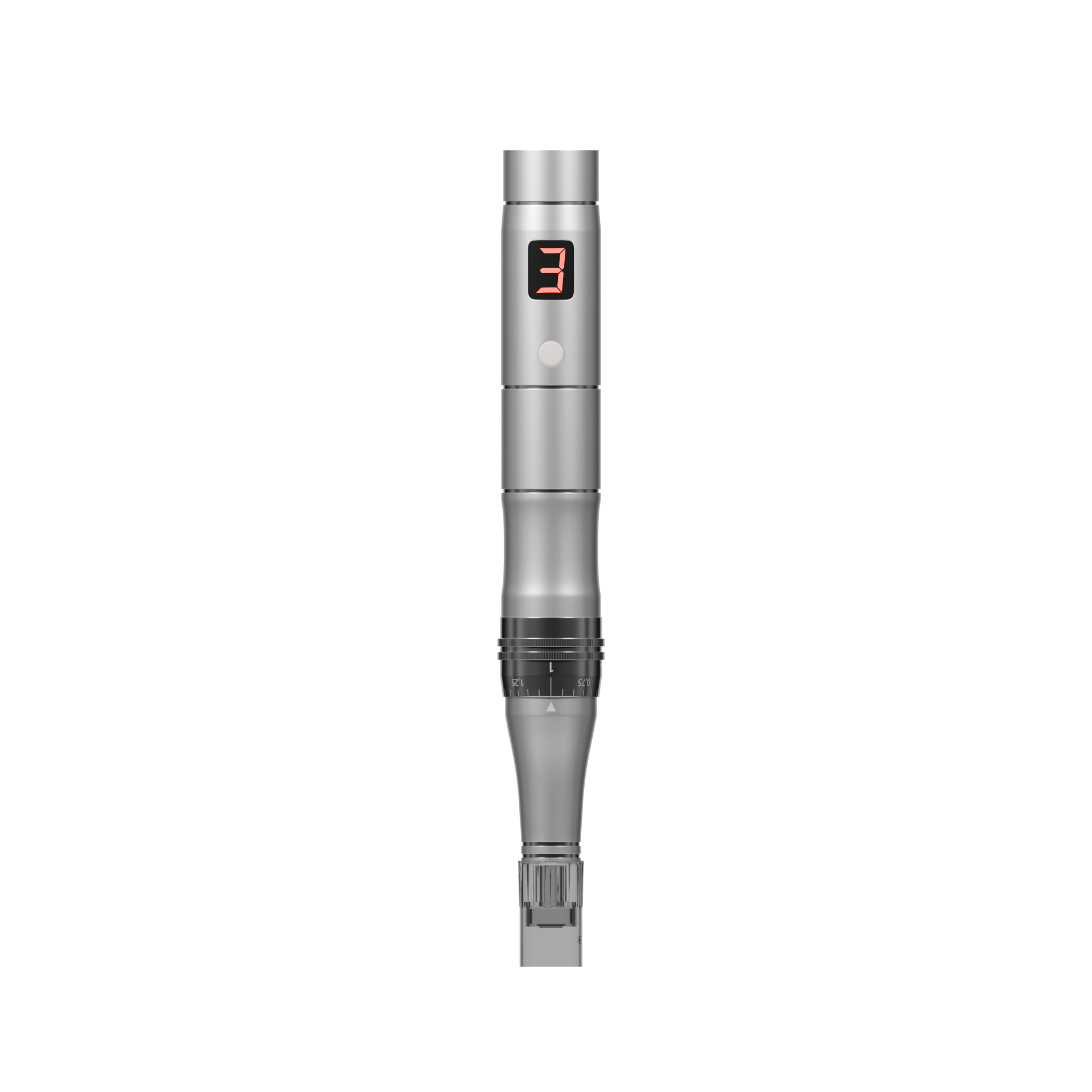
Built for male skin
Powerful enough to deliver visible change. Refined enough for safe weekly use at home.
What To Expect
What real users report — week by week.
Skin doesn't change overnight. Here's the honest timeline for most men.
Wk 1–3
Routine in, no visible change yet
Treatment is comfortable and quick. The work is happening at the dermal layer — invisible from the outside, but the fibroblasts are switching on.
Wk 4–6
Brighter, less tired-looking
Most men describe this stage first: complexion looks more rested. Mornings feel less harsh. Specific lines haven't softened yet.
Wk 8–12
Structural change becomes visible
Firmness, evenness, and the gradual softening of fine lines around the eyes and forehead become obvious — often to other people before you notice yourself.
Wk 12+
Compounding gains, prevention mode
Continued weekly use builds collagen reserves your face would otherwise lose. The men who start in their 30s do the least work for the biggest cumulative result.